
What is the best kitchen layout? The best kitchen layout is one that prioritizes efficiency and ease of movement, often referred to as “flow.” This is achieved through careful space planning for kitchens, focusing on the kitchen work triangle and kitchen zoning.
Designing a kitchen layout that promotes perfect flow is about more than just aesthetics; it’s about creating a functional heart of the home. A well-designed kitchen makes everyday tasks simpler, reduces frustration, and enhances the joy of cooking and gathering. The goal is to move smoothly between key areas: storage, preparation, cooking, and cleaning. Achieving this requires a thoughtful approach to kitchen workflow and kitchen functionality.
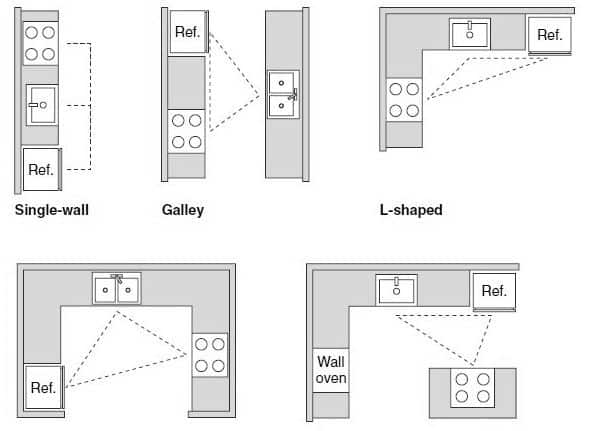
Image Source: www.fitzgeraldkitchens.com
The Foundation: The Kitchen Work Triangle
At the core of efficient kitchen design lies the kitchen work triangle. This concept, developed in the 1920s, identifies the three main work areas in a kitchen: the refrigerator (storage), the sink (cleaning), and the stove/cooktop (cooking). The idea is that these three points form a triangle, and the distance between them should be optimized to minimize steps and maximize efficiency.
Defining the Vertices
- The Refrigerator: This is where your food is stored. Easy access to it is crucial for getting ingredients out for prep and for putting away groceries.
- The Sink: This is the hub for washing produce, cleaning dishes, and filling pots. It’s often linked to the dishwasher and waste disposal.
- The Stove/Cooktop: This is where the actual cooking happens. It needs adequate countertop space nearby for plating and resting finished dishes.
Ideal Distances and Considerations
The kitchen work triangle isn’t about rigidly measuring specific distances, but about ensuring a comfortable and logical path between these three points.
- Total Length: The sum of the three sides of the triangle should ideally be between 13 and 26 feet (4 to 8 meters).
- Individual Sides: Each side of the triangle should be at least 4 feet (1.2 meters) long to allow for comfortable movement and prevent them from being too close.
- No Obstructions: The paths between the work areas should be clear of traffic flow or major obstructions like islands or dining tables if possible.
Table 1: Ideal Work Triangle Dimensions
| Component | Ideal Minimum Distance | Ideal Maximum Distance |
|---|---|---|
| Fridge to Sink | 4 feet (1.2 m) | 9 feet (2.7 m) |
| Sink to Stove | 4 feet (1.2 m) | 9 feet (2.7 m) |
| Stove to Fridge | 4 feet (1.2 m) | 9 feet (2.7 m) |
| Total | 13 feet (4 m) | 26 feet (8 m) |
Note: These are guidelines, not strict rules. The actual layout of your kitchen, especially with multiple cooks or unique room shapes, may require adjustments.
Evolving Beyond the Triangle: Kitchen Zoning
While the kitchen work triangle is a foundational concept, modern kitchens, especially larger ones, benefit from an expanded approach called kitchen zoning. This method breaks down kitchen tasks into distinct zones, acknowledging that a kitchen is more than just three points.
Key Kitchen Zones
- The Prep Zone: This is where most of the chopping, mixing, and general food preparation takes place. It should be located between the sink and the stove, with ample countertop space.
- The Cooking Zone: Centered around the cooktop or range, this zone needs proximity to cooking utensils, pots, pans, and frequently used spices and oils.
- The Cleaning Zone: This includes the sink, dishwasher, and trash/recycling bins. Easy access to cleaning supplies is also essential here.
- The Storage Zone: This encompasses the refrigerator, pantry, and cabinets where food items, dishes, and cookware are kept.
- The Serving/Eating Zone (Optional): In some layouts, this might include a breakfast bar or a dedicated dining area adjacent to the kitchen.
How Zoning Enhances Flow
Kitchen zoning creates a more intuitive kitchen workflow. Instead of thinking about just three points, you consider the sequence of actions. You grab ingredients from storage, bring them to the prep zone, then move them to the cooking zone, and finally to the cleaning zone. By dedicating specific areas to these tasks and ensuring they flow logically, you minimize backtracking and unnecessary movement.
Common Kitchen Layouts and Their Flow
The shape and size of your kitchen space will heavily influence which layout works best. Each layout offers different opportunities and challenges for creating perfect flow.
1. The Galley Kitchen
- Description: Two parallel walls with a central walkway.
- Flow: Excellent for small spaces. The kitchen work triangle can be very compact and efficient. Tasks flow logically along one wall or between the two.
- Pros: Highly efficient, minimal wasted space, good for one or two cooks.
- Cons: Can feel cramped, limited countertop space if not designed well, traffic can disrupt workflow if the walkway is too narrow.
2. The L-Shaped Kitchen
- Description: Cabinets and appliances along two adjacent walls, forming an “L.”
- Flow: Offers a good kitchen work triangle and allows for a more open feel. It naturally creates a corner for the sink or stove.
- Pros: Versatile, can accommodate a dining nook, good countertop space, allows for easy movement.
- Cons: Can create a dead corner that is difficult to access in the cabinet layout, the work triangle can sometimes be stretched if the “L” is very long.
3. The U-Shaped Kitchen
- Description: Cabinets and appliances along three walls, forming a “U.”
- Flow: Provides excellent countertop space and storage. The kitchen work triangle is often very compact and efficient, with all zones within easy reach.
- Pros: Maximizes storage and countertop space, excellent kitchen functionality, good for multiple cooks as there are fewer traffic conflicts.
- Cons: Can feel enclosed, requires more space, the far end of the “U” might be less accessible.
4. The One-Wall Kitchen
- Description: All cabinets and appliances are placed along a single wall.
- Flow: The kitchen work triangle is essentially a straight line. This is the most compact layout.
- Pros: Ideal for very small apartments or studios, cost-effective.
- Cons: Very limited countertop space, can feel cramped, workflow can be interrupted if the working area is too short.
5. The Island Kitchen
- Description: Adds an island to any of the above layouts (most commonly L-shaped or U-shaped).
- Flow: The kitchen island placement can significantly impact flow. It can act as a central hub for prep, serving, or even a secondary sink or cooktop. It can enhance or disrupt the kitchen work triangle.
- Pros: Adds significant countertop space, storage, and seating. Can improve kitchen workflow by providing a dedicated prep area.
- Cons: Requires ample space to maintain good traffic flow, can obstruct the kitchen work triangle if poorly placed.
6. The Peninsula Kitchen
- Description: Similar to an island but attached to a wall or cabinet at one end.
- Flow: Offers some of the benefits of an island without requiring as much open space. It can help define zones and provide extra countertop space.
- Pros: Adds workspace and storage, can create a natural divider between kitchen and dining areas, good for smaller spaces than a full island.
- Cons: Can still limit traffic flow if not positioned correctly, can make the kitchen feel more closed off than an island.
Strategic Appliance Placement for Optimal Workflow
Appliance placement is a critical element in achieving perfect flow. Each appliance needs its own dedicated space and should be positioned considering the kitchen workflow.
Refrigerator Placement
- Best Practice: Position the refrigerator so its doors open towards the main working area or into the kitchen, not into a wall or a high-traffic zone. Ideally, it should be the first point of call when entering the kitchen to put away groceries.
- Proximity: Place it near the entrance for unloading groceries and close to the prep zone for easy access to ingredients.
- Avoid: Placing it directly next to the oven or dishwasher, as this can create competing heat and workflow conflicts.
Stove/Cooktop and Oven Placement
- Best Practice: The cooktop needs ample landing space on either side. One side should ideally lead to the prep zone, and the other to the serving area.
- Ventilation: Ensure proper ventilation is in place above the cooktop.
- Oven: Wall ovens offer more flexibility in placement, often near the prep zone or on a separate wall. Ranges combine the cooktop and oven, requiring a dedicated spot.
- Proximity: Keep cooking utensils, pots, and pans easily accessible from the cooktop.
Sink and Dishwasher Placement
- Best Practice: The sink and dishwasher should be close neighbors. Ideally, the dishwasher is placed to the right or left of the sink for easy loading.
- Proximity: Place the sink near the prep zone for washing produce and rinsing dishes. It also serves as the endpoint for cleaning.
- Avoid: Placing the sink directly opposite the cooktop if space is tight, as this can create a bottleneck.
Microwave Placement
- Best Practice: Consider a built-in microwave in a wall oven stack or a dedicated cabinet space at a comfortable height (not too high or too low).
- Alternative: Countertop microwaves are common but can take up valuable countertop space.
- Proximity: Often placed near the prep zone or refrigerator for reheating leftovers.
Maximizing Countertop Space and Cabinet Layout
Ample countertop space and an intelligent cabinet layout are the backbone of kitchen functionality and efficient workflow.
Countertop Space: More Than Just a Surface
- Landing Zones: Ensure you have adequate landing space next to major appliances (at least 15-18 inches) for placing hot dishes or ingredients.
- Prep Area: Designate a primary prep zone with a generous, uninterrupted stretch of countertop, ideally between the sink and the stove.
- Work Surfaces: Consider different types of countertops for different uses. For instance, butcher block is great for chopping, while stone is excellent for baking.
Cabinet Layout: Storage and Accessibility
A well-planned cabinet layout ensures everything has its place and is easy to reach.
- Drawer vs. Doors: Prioritize drawers in base cabinets for easier access to pots, pans, and dishes. They are more ergonomic kitchen design friendly than deep cabinets with shelves.
- Zone-Based Storage: Store items where they are most used. Pots and pans near the stove, dishes and glasses near the dishwasher or dining area, pantry items in the pantry or a dedicated cabinet.
- Upper Cabinets: Use them for less frequently used items or for lighter dishes. Consider open shelving for frequently accessed items or decorative displays.
- Pull-Outs and Organizers: Utilize pull-out shelves, lazy Susans, spice racks, and trash/recycling bins to maximize space and accessibility within cabinets.
Table 2: Cabinet Storage Suggestions by Zone
| Zone | Primary Storage Items | Cabinet/Drawer Suggestions |
|---|---|---|
| Storage | Food items, pantry goods | Deep pantry shelves, pull-out pantry units, lower drawers |
| Prep | Utensils, mixing bowls, cutting boards | Deep drawers, divided drawer inserts, accessible lower cabinets |
| Cooking | Pots, pans, lids, cooking oils, spices | Deep drawers for pots/pans, spice rack pull-outs, lower cabinets |
| Cleaning | Dish soap, sponges, cleaning supplies, trash/recycling | Sink base cabinet with pull-out trash, drawers for cleaning supplies |
| Serving | Dishes, glasses, cutlery | Upper cabinets, accessible drawers near the dining area |
Ergonomic Kitchen Design: Comfort and Safety
Ergonomic kitchen design focuses on making the kitchen comfortable, safe, and efficient for the user. It’s about designing for the human body.
Key Ergonomic Principles
- Countertop Height: Standard countertop height is 36 inches, but this can be adjusted for individuals. A slightly lower counter (around 30-32 inches) can be more comfortable for chopping and prep work, especially if the primary cook is shorter.
- Appliance Height: Wall ovens and microwaves should be at a height that allows you to see inside without excessive bending or reaching.
- Drawer Accessibility: Base cabinet drawers are far more ergonomic than shelves, reducing the need to bend and search.
- Traffic Flow: Ensure sufficient walkway clearance (at least 36 inches, ideally 42-48 inches for main paths) to prevent bumping into cabinets or appliances.
- Lighting: Good task lighting over prep areas, the sink, and the stove is crucial for safety and comfort.
Advanced Space Planning for Kitchens
Beyond the basic layouts, advanced space planning for kitchens considers how the kitchen interacts with the rest of the home and specific user needs.
Open Concept vs. Dedicated Kitchen
- Open Concept: Kitchens that flow directly into living or dining areas benefit from careful appliance placement and cabinet layout to maintain a clean aesthetic. Islands can act as a visual divider.
- Dedicated Kitchen: Traditional kitchens can focus purely on kitchen functionality without as much concern for visual impact on other rooms.
Multi-Cooker Kitchens
If you frequently cook with multiple people, consider:
- Dual Work Zones: Separate prep areas or even a secondary sink can be beneficial.
- Island Functionality: A large island can accommodate multiple people working simultaneously.
- Clear Pathways: Ensure ample space between workstations to avoid congestion.
Accessibility and Universal Design
For kitchens designed for people with mobility issues or for aging in place:
- Wider Walkways: Increase clearance between cabinets and islands.
- Accessible Appliances: Wall ovens with side-opening doors, cooktops with controls at the front, dishwashers that pull out like drawers.
- Adjustable Shelving: Allow for customization of cabinet heights.
- Easily Reachable Storage: Prioritize drawers and pull-out shelves in base cabinets.
Bringing it All Together: Designing Your Perfect Flow
Designing your kitchen layout is an iterative process. Start with your needs, then consider the space.
- Assess Your Space: Measure your kitchen accurately. Note window and door placements, existing plumbing and electrical points, and any architectural features.
- Identify Your Needs: How do you use your kitchen? Are you a gourmet chef, a busy parent, or someone who entertains frequently? This will influence your kitchen workflow priorities.
- Sketch Your Ideas: Start drawing different layout options. Don’t be afraid to try various combinations.
- Apply the Work Triangle and Zoning: See how your chosen layout supports the kitchen work triangle and establishes clear kitchen zones.
- Strategize Appliance Placement: Position major appliances for optimal kitchen workflow.
- Plan Your Cabinet Layout: Think about storage needs and accessibility.
- Focus on Countertop Space: Ensure you have enough functional countertop space in key areas.
- Incorporate Ergonomics: Design with comfort and safety in mind.
- Refine and Iterate: Get feedback, review your plans, and make adjustments until you achieve the desired flow and kitchen functionality.
A well-designed kitchen layout is a significant investment that pays dividends in daily convenience and enjoyment. By focusing on the kitchen work triangle, kitchen zoning, smart appliance placement, and a thoughtful cabinet layout, you can create a space that is not only beautiful but also perfectly functional and a joy to work in.
Frequently Asked Questions (FAQ)
Q1: What is the ideal distance between kitchen appliances?
A1: The ideal distance for the kitchen work triangle is between 4 and 9 feet for each leg, with a total triangle perimeter between 13 and 26 feet. This ensures easy movement without excessive walking.
Q2: Can I put a kitchen island in a small kitchen?
A2: Yes, you can, but kitchen island placement is crucial. Opt for a smaller, mobile island or a peninsula if space is limited. Ensure there is at least 36 inches of clearance around it for traffic flow.
Q3: How do I improve my kitchen workflow if I have an awkward-shaped kitchen?
A3: Focus on kitchen zoning. Even in an awkward space, you can create functional zones for prep, cooking, and cleaning. Prioritize logical transitions between these zones, even if they don’t form a perfect triangle. Space planning for kitchens is key here.
Q4: Is an L-shaped or U-shaped kitchen better for flow?
A4: Both can offer excellent flow. A U-shaped kitchen often provides a more compact and efficient kitchen work triangle and ample countertop space. An L-shaped kitchen can feel more open and may be better if you want to incorporate a dining area.
Q5: What are the most important aspects of ergonomic kitchen design?
A5: Key aspects include appropriate countertop heights, accessible appliance placement (especially ovens and microwaves), the use of drawers over shelves in base cabinets, good task lighting, and ensuring adequate walkway clearance for comfortable movement. This directly impacts kitchen functionality.
Q6: How much countertop space do I need in my kitchen?
A6: Aim for at least 15-18 inches of landing space next to major appliances. A primary prep zone of 36 inches or more of continuous countertop space is highly recommended for efficient kitchen workflow.
Q7: What is the purpose of kitchen zoning?
A7: Kitchen zoning breaks down the kitchen into functional areas (prep, cooking, cleaning, storage) to improve kitchen workflow and kitchen functionality. It makes tasks more intuitive by placing related items and activities together.