
Can you make your own cement kitchen countertops? Yes, you can create beautiful, custom cement kitchen surfaces yourself with a bit of planning and effort! This guide will walk you through the entire process of building concrete countertops, from start to finish, allowing you to craft a unique and durable addition to your kitchen, perhaps even a stunning concrete kitchen island.
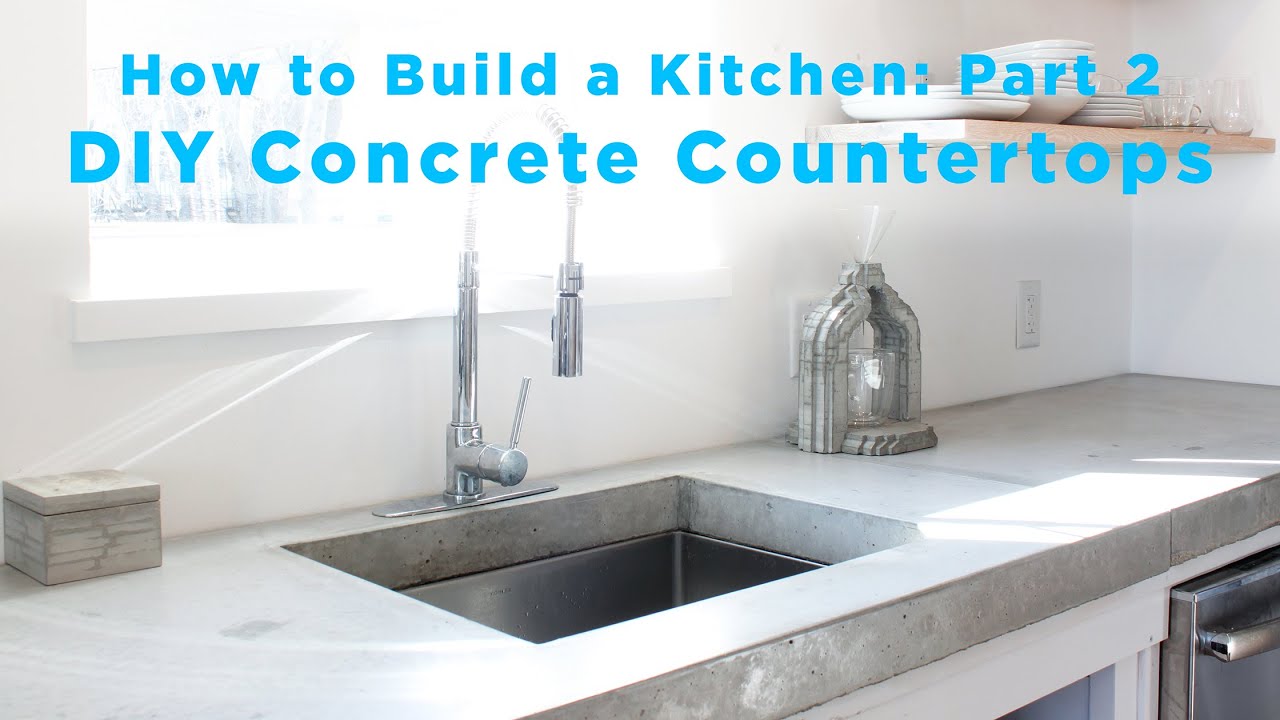
Image Source: i.ytimg.com
Planning Your Project
Before you mix any cement, careful planning is key to successful DIY concrete countertops. This stage sets the foundation for a smooth and efficient building process.
Design and Layout
Consider the exact dimensions of your countertops. Measure your existing cabinets or cabinet bases precisely. If you’re installing new cabinets, ensure they are level and securely fastened. Think about edge profiles. Common options include a simple square edge, a rounded bullnose, or a more decorative custom edge. Your design will also influence the size and shape of your concrete countertop molds.
Material Selection
Choosing the right materials is crucial for the strength, appearance, and longevity of your cement kitchen surfaces.
Cement Mix
You have a few options for your cement mix:
- Standard Portland Cement: This is the most common type. You’ll typically mix it with sand, gravel (though often omitted for countertops for a smoother finish), and water.
- Pre-mixed Countertop Concrete Mix: Many manufacturers offer specialized mixes designed for countertops. These often contain additives that improve strength, reduce shrinkage, and enhance workability. These are generally easier for DIYers.
Reinforcement
Concrete is strong in compression but weak in tension. Reinforcement adds tensile strength and helps prevent cracking.
- Wire Mesh: Galvanized hardware cloth or rebar mesh is a common choice. It provides good support for the concrete.
- Fiber Mesh: Synthetic fibers mixed into the concrete can also help reduce cracking.
Additives and Pigments
- Plasticizers: These improve the flow and workability of the concrete mix, making it easier to pour into molds and achieve a smooth finish.
- Water Reducers: These allow you to use less water while maintaining workability, leading to stronger concrete.
- Color Pigments: Integral colorants can be added to the mix to achieve a wide range of shades for your custom concrete counters.
- Aggregate (Optional): While many prefer a smooth finish for their concrete kitchen island or counters, you can incorporate decorative aggregates like glass chips, pebbles, or recycled materials for a unique look.
Tool Gathering
Having the right tools will make the process of building concrete countertops much easier.
- Safety Gear: Gloves, safety glasses, dust mask, and sturdy work boots are essential.
- Measuring and Mixing: Measuring cups/buckets, shovels, wheelbarrow or mixing tub, drill with mixing paddle.
- Formwork: Melamine-coated particle board (or plywood sealed with melamine paint/varnish), screws, silicone caulk, caulk gun, masking tape.
- Pouring and Finishing: Trowels (magnesium and steel), screed board, vibrator (orbital sander without sandpaper attachment can work), finishing floats.
- Demolding and Sealing: Pry bars, chisels (for stubborn bits), concrete countertop sealer, polishing pads (if desired).
Creating the Molds
The molds are what give your cement kitchen surfaces their shape. Precision here is paramount.
Mold Construction
The most common method for DIY concrete countertops is to pour them in place or to pour them upside down in molds built on a flat surface. Pouring upside down often yields a smoother, more finished surface as it’s the bottom of the mold.
For Upside-Down Pouring (Recommended)
-
Measure and Cut Your Base: Use a smooth, flat, and rigid material like a sheet of melamine-coated particle board or a thick piece of plywood that has been sealed. This will be the base of your mold. It should be slightly larger than your final countertop dimensions to allow for edge forms.
-
Build the Sides: Cut strips of melamine-coated particle board to the desired thickness of your countertops. The melamine surface is critical for a smooth release.
-
Assemble the Forms: Screw the side pieces onto the base, forming the outer perimeter of your countertop. Ensure all corners are perfectly square. Seal all inside seams and corners with 100% silicone caulk. This prevents concrete from seeping through and creates a clean, rounded edge where the concrete meets the form, which is easier to finish. Use a caulk gun and smooth the bead with your finger (dipped in soapy water for easier smoothing). Apply masking tape along the outside edge of the caulk to keep it clean.
-
Consider Reinforcement Placement: If you’re using wire mesh, cut it to fit inside the mold, leaving about an inch of clearance from the sides and bottom. You’ll want to suspend it in the middle of the concrete thickness. Small plastic rebar chairs or bits of plastic can be used to hold the mesh up.
-
Pre-finish the Mold (Optional but Recommended): For embedded aggregates or complex finishes, you might pre-finish the mold surface. This could involve embedding glass chips or applying decorative elements to the base of the mold before pouring.
For In-Place Pouring
This method is more challenging for DIYers as it requires significant support and careful finishing on-site. Molds are built directly around the cabinets.
-
Create the Forms: Similar to upside-down pouring, but the forms are built in place around the cabinet edges. You’ll need to ensure the forms are perfectly level and well-supported.
-
Seal Meticulously: Any gaps or imperfections will show in the final product. Use silicone caulk generously on all interior seams and edges.
-
Prepare for Reinforcement: Reinforcement is placed within the forms, ensuring it doesn’t touch the forms directly.
Creating the Countertop Molds Details
Here’s a breakdown of key considerations when building your concrete countertop molds:
| Feature | Importance | Tips |
|---|---|---|
| Flatness | Crucial for a level countertop. | Use a known flat surface as your base. Check with a level. |
| Squareness | Ensures countertops fit cabinets and look professional. | Measure diagonals; they should be equal. |
| Smoothness | Melamine surface prevents sticking and provides a smooth finish. | Avoid scratching the melamine. If using plywood, apply multiple coats of high-gloss melamine paint. |
| Sealing | Prevents leaks and creates clean edges. | Use 100% silicone caulk. Ensure a consistent, smooth bead. |
| Reinforcement | Prevents cracking. | Suspend mesh in the middle of the concrete thickness. |
| Release Agent | Essential for easily removing the concrete from the mold. | Use a commercial mold release or paste wax. Apply to all mold surfaces. |
Mixing and Pouring the Concrete
This is where your custom concrete counters start to take shape. Patience and careful execution are vital.
Preparing the Mix
-
Read the Manufacturer’s Instructions: If using a pre-mixed countertop concrete, follow the bag’s instructions precisely regarding water ratios and mixing times.
-
Dry Mixing: If mixing from scratch, combine your dry ingredients thoroughly in a wheelbarrow or mixing tub. Ensure even distribution of cement, sand, and any pigments or additives.
-
Adding Water: Gradually add water while mixing. Aim for a consistency like thick oatmeal or peanut butter – not too soupy, not too dry. Too much water weakens the concrete. If using a mixer attachment on a drill, start on low speed.
-
Incorporating Pigment: If using color pigments, add them during the dry mixing stage to ensure even distribution.
Pouring the Concrete
-
Pouring into Molds: Carefully spoon or pour the concrete mix into your prepared molds. Work in manageable sections.
-
Filling the Molds: Fill the molds to the desired thickness. For larger countertops or those with sinks or cutouts, consider using reinforcement that extends through these areas.
-
Consolidating the Concrete: This is a critical step to remove air bubbles and ensure a dense, strong countertop.
- Vibration: Gently tap the sides of the mold with a rubber mallet or use an orbital sander (without sandpaper) against the sides and bottom of the mold. Move the sander around the entire perimeter.
- Tamping: For smaller areas, you can gently tamp the concrete with a trowel.
-
Screeding: Use a straight board (screed board) to level the surface of the concrete. Drag the board across the top of the forms in a sawing motion to remove excess concrete and fill low spots.
-
Initial Troweling: Once the concrete has been screeded, use a magnesium float to further smooth the surface.
Pouring Concrete Counters Tips
- Work Quickly: Concrete begins to set once water is added, so work efficiently.
- Consistent Consistency: Ensure your mix has a uniform consistency throughout.
- Overfill Slightly: It’s better to have a little excess concrete to screed off than to have voids.
- Avoid Overworking: Overworking the surface can bring too much aggregate to the top and weaken the surface layer.
Curing and Demolding
Proper curing is essential for the strength and durability of your cement kitchen surfaces.
The Curing Process
-
Initial Set: Allow the concrete to set in the mold for at least 24-48 hours, depending on ambient temperature and humidity. The concrete should feel firm to the touch.
-
Continued Curing: Concrete gains strength over time through a process called hydration. For the first week or more, keep the concrete moist to ensure optimal strength development. You can do this by:
- Misting: Lightly mist the concrete surface with water multiple times a day.
- Covering: Cover the mold with plastic sheeting to trap moisture.
-
Patience is Key: Resist the urge to demold too early. Premature demolding can lead to breakage or surface damage.
Demolding Your Countertops
-
Remove Screws: Carefully unscrew the side forms.
-
Gently Pry: Use pry bars to gently separate the forms from the concrete. Work your way around the perimeter, being careful not to chip or damage the edges. Sometimes, a thin shim can help break the seal.
-
Flip and Inspect: With help, carefully flip the countertop onto a protected surface. Inspect it for any voids or imperfections. Small voids can often be filled with a concrete patch or slurry.
Finishing and Sealing
The finishing touches are what elevate your DIY concrete countertops from raw material to a beautiful, functional surface.
Grinding and Polishing (Optional)
For a smoother, more polished look, you can grind and polish your concrete kitchen island or countertops.
-
Grinding: Use a concrete grinder with progressively finer diamond polishing pads. Start with a coarser grit (e.g., 50-100 grit) to remove any imperfections and level the surface.
-
Polishing: Work your way up through finer grits (e.g., 200, 400, 800, 1500, 3000 grit) to achieve the desired level of shine. Keep the surface wet while grinding/polishing to reduce dust and keep the pads cool.
-
Cleaning: Thoroughly clean the surface after grinding to remove all dust and slurry.
Filling Voids and Pores
Even with careful pouring, small pinholes or voids might appear on the surface.
- Concrete Patch or Slurry: You can use a specialized concrete patch or create a slurry (a thin mix of cement and water, sometimes with added pigments) to fill these imperfections.
- Application: Apply the patch or slurry with a squeegee or trowel, pushing it into the voids.
- Wipe Away Excess: Once applied, use a damp cloth or trowel to wipe away excess material from the surrounding surface. Allow it to cure.
Applying the Concrete Countertop Sealer
This is a crucial step to protect your cement kitchen surfaces from stains, acids, and moisture.
-
Choose Your Sealer: There are various types of concrete sealers available:
- Penetrating Sealers: These soak into the concrete, providing protection from within. They generally don’t alter the appearance of the concrete.
- Topical Sealers (Densifiers/Polymers): These form a protective layer on the surface. Some can add a sheen or enhance color. They offer excellent stain resistance. Many DIY concrete countertop kits include a two-part sealer system.
-
Application: Follow the manufacturer’s instructions precisely. This typically involves applying thin, even coats using a brush, roller, or sprayer.
-
Multiple Coats: Most sealers require multiple coats, with drying time in between.
-
Buffing (if applicable): Some topical sealers may require buffing with a soft cloth after drying to achieve the final sheen.
Concrete Countertop Sealer Considerations
- Food Safety: Ensure your chosen sealer is rated as food-safe if your countertops will be used for food preparation.
- Durability: Consider how durable the sealer is and how often it will need reapplication.
- Appearance: Sealers can enhance or slightly alter the color of the concrete. Test on a scrap piece first.
Building Concrete Countertops: Advanced Techniques
For those looking to push the boundaries of their DIY concrete countertops, consider these advanced techniques.
Integral Color
Instead of relying on topical stains or dyes, adding pigments directly to the concrete mix provides a color that’s consistent throughout the entire slab. This means that if the surface gets scratched, the color underneath will match.
Embedded Objects
Incorporate decorative elements into your concrete kitchen surfaces by embedding them into the molds before pouring. This could include:
- Glass Chips or Sea Glass: For a sparkling effect.
- River Stones or Pebbles: For a natural, organic look.
- Recycled Materials: Crushed ceramics, metal fragments, or even bottle caps can be used for a unique artistic statement.
Stamping or Texturing
While less common for kitchen countertops due to cleaning implications, you can achieve textured finishes by pressing objects into the concrete while it’s still wet or by using specialized stamps.
Overlaying Existing Surfaces
A concrete overlay kitchen offers a way to update your look without tearing out old countertops.
- Preparation: Thoroughly clean and etch the existing surface.
- Bonding Agent: Apply a bonding agent to ensure adhesion.
- Thin Layer Pour: Apply a thin layer of specialized overlay concrete mix using a trowel. This is more akin to a plastering technique.
- Finishing: Finish and seal as you would with a thicker pour.
Maintenance of Your Cement Kitchen Surfaces
Proper care will ensure your custom concrete counters remain beautiful for years to come.
Daily Cleaning
- Use mild dish soap and water.
- Avoid abrasive cleaners or scouring pads, which can damage the sealer.
Stain Prevention
- Wipe up spills immediately, especially acidic substances like lemon juice, vinegar, or wine.
- Use trivets for hot pots and pans, as extreme temperature changes can potentially crack the concrete or damage the sealer.
Resealing
- The frequency of resealing depends on the type of sealer used and the amount of wear the countertops receive.
- As a general rule, topical sealers may need reapplication every 1-3 years, while penetrating sealers might last longer.
- A simple test is to splash a little water on the surface. If the water beads up, the sealer is still effective. If it soaks in and darkens the concrete, it’s time to reseal.
Frequently Asked Questions (FAQ)
Q1: Are concrete countertops durable?
A1: Yes, properly mixed, cured, and sealed concrete countertops are very durable. They are resistant to heat and scratches. However, they can chip if subjected to a sharp, heavy impact, and certain acidic foods can etch the surface if not sealed properly and spills aren’t wiped up promptly.
Q2: Are DIY concrete countertops expensive?
A2: The cost can vary significantly depending on your material choices, tools you already own, and the complexity of your design. Generally, DIY concrete countertops are more affordable than natural stone or high-end solid surface materials. The main costs are materials (cement mix, reinforcement, sealer, pigments) and specialized tools if you don’t have them.
Q3: Can I add a sink cutout to my concrete countertop?
A3: Yes, you can create sink cutouts. This is typically done by using a mold with a positively shaped cutout form (often made of foam or wood) placed within the main mold during the pour. Alternatively, you can cut the opening after the concrete has cured using a wet saw with a diamond blade. The edges of the cutout will then need to be sealed.
Q4: How much do concrete countertops weigh?
A4: Concrete is heavy. A typical 2-inch thick concrete countertop weighs around 18-25 pounds per square foot. Ensure your cabinets are strong enough to support this weight. You may need to reinforce existing cabinets.
Q5: What is the best concrete countertop sealer for DIY projects?
A5: For DIY projects, two-part water-based acrylic sealers or topical sealers often provide a good balance of durability, ease of application, and stain resistance. Many kits come with specific sealers designed for their mixes. Always test the sealer on a scrap piece of concrete first to see how it affects the color and sheen.
Q6: Can I repair chips or cracks in my concrete countertops?
A6: Yes, minor chips and cracks can usually be repaired with a concrete patching compound or a slurry mixed to match the color of your countertop. For larger structural issues, professional repair might be necessary.
Q7: How do I clean concrete countertops?
A7: Clean with a soft cloth or sponge, warm water, and a mild, pH-neutral dish soap. Rinse thoroughly and dry. Avoid abrasive cleaners, scouring pads, and harsh chemicals like bleach or ammonia, as they can damage the sealer.
Q8: Do concrete countertops stain easily?
A8: Unsealed concrete is very porous and will stain easily. However, a properly applied concrete countertop sealer will provide excellent stain resistance. Be sure to wipe up spills promptly, especially acidic liquids like wine, citrus juice, or vinegar.
By following these steps and paying close attention to detail, you can successfully create beautiful and durable DIY concrete countertops that will be a unique focal point in your kitchen for years to come. Enjoy the process of building your custom concrete counters!